Peptide
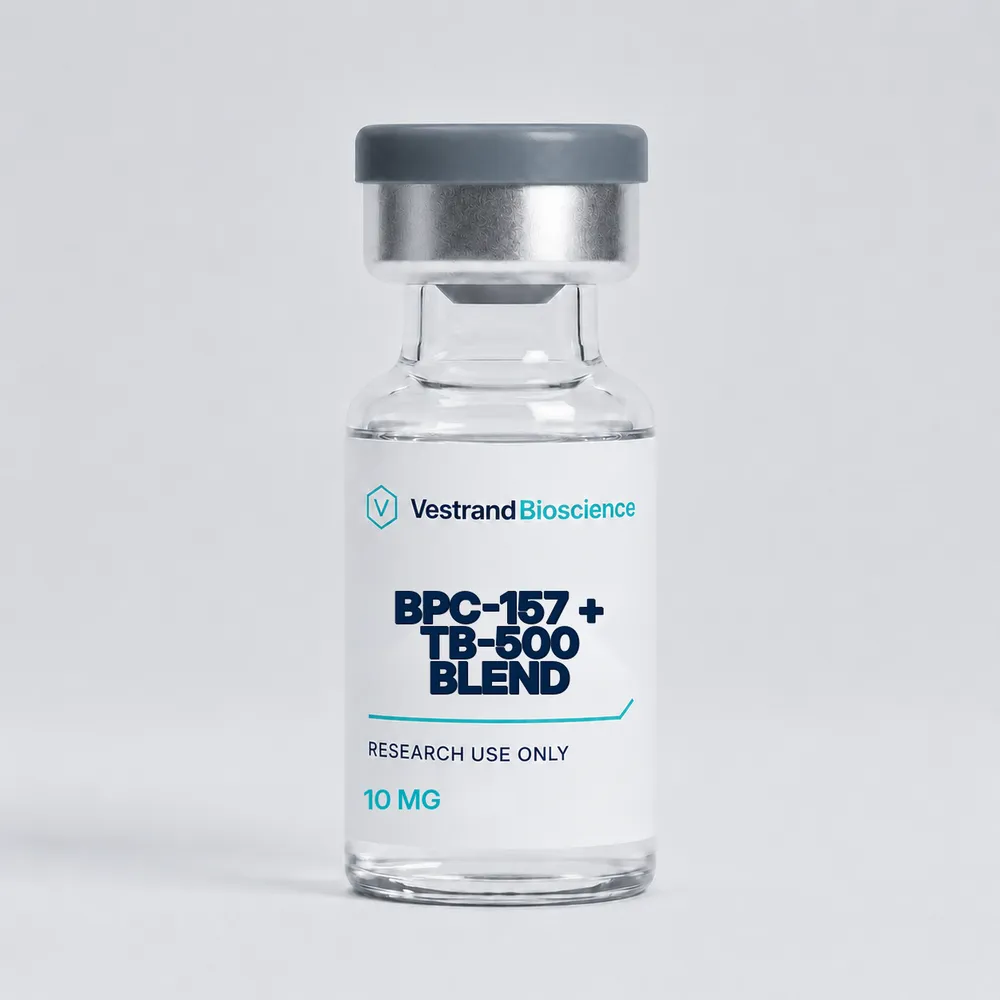
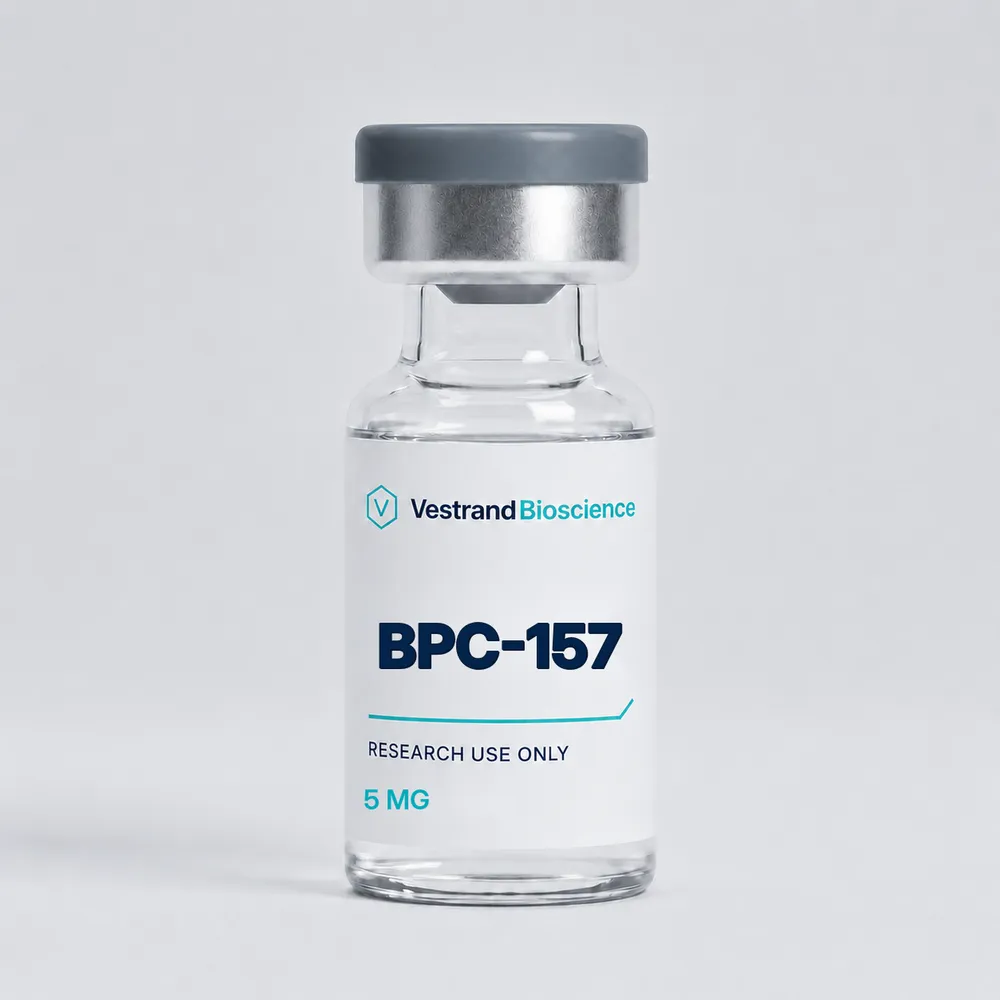
BPC-157
A synthetic peptide of fifteen building blocks (a pentadecapeptide), based on a partial sequence of a protein first identified in gastric juice.
- Specification
- greater than or equal to 98.0 percent
- Measured lot value
- Lot pending
Research Peptides & Reference Materials
Every lot of every peptide we supply carries its own certificate of analysis — purity by RP-HPLC, identity by mass spectrometry, retrievable by lot number before you order.
49 research compounds · 12 mechanism-class collections · certificate of analysis per lot
The method and the threshold are published, per item. We would rather show the procedure than assert a result.
A stated purity floor for every compound, with the method named — ≥98.0% by RP-HPLC for peptides. Never a bare “high purity.”
Each production lot has its own certificate of analysis, retrievable by lot number without an account. No document yet? The page says so.
Purity by reverse-phase HPLC and identity by mass spectrometry, reported per lot by an independent contract laboratory.
Lyophilized material ships in plain, insulated packaging with a phase-change pack. Transit temperature is not monitored.
Verification
Most suppliers make the same three claims — high purity, third-party tested, made in the USA — and none of them can be checked at the moment of purchase. Our position is narrower and checkable: the evidence is named, per-lot, and findable in seconds.
Retrieve the certificate for the exact vial you are holding by entering its lot number. No account, no email gate. Where a lot’s results have not yet published, the certificate field shows its designed pending state — the specification never stands in for a measurement.
How purity reads on this site
The specification is the standing commitment we make; the lot value is a measurement an instrument produced. Shown side by side — never merged, never rounded.
A cross-section of the compounds researchers ask for most often. Each links to a full specification and its lot documentation.
Peptide
A synthetic peptide of fifteen building blocks (a pentadecapeptide), based on a partial sequence of a protein first identified in gastric juice.
Peptide
A short peptide of seven amino acids corresponding to a fragment of the protein thymosin β4. A crystalline solid, supplied as a single-lot reference material.
Peptide
A synthetic 31-amino-acid research peptide in the GLP-1 receptor agonist class. A crystalline solid, supplied as a single-lot reference material.
Peptide
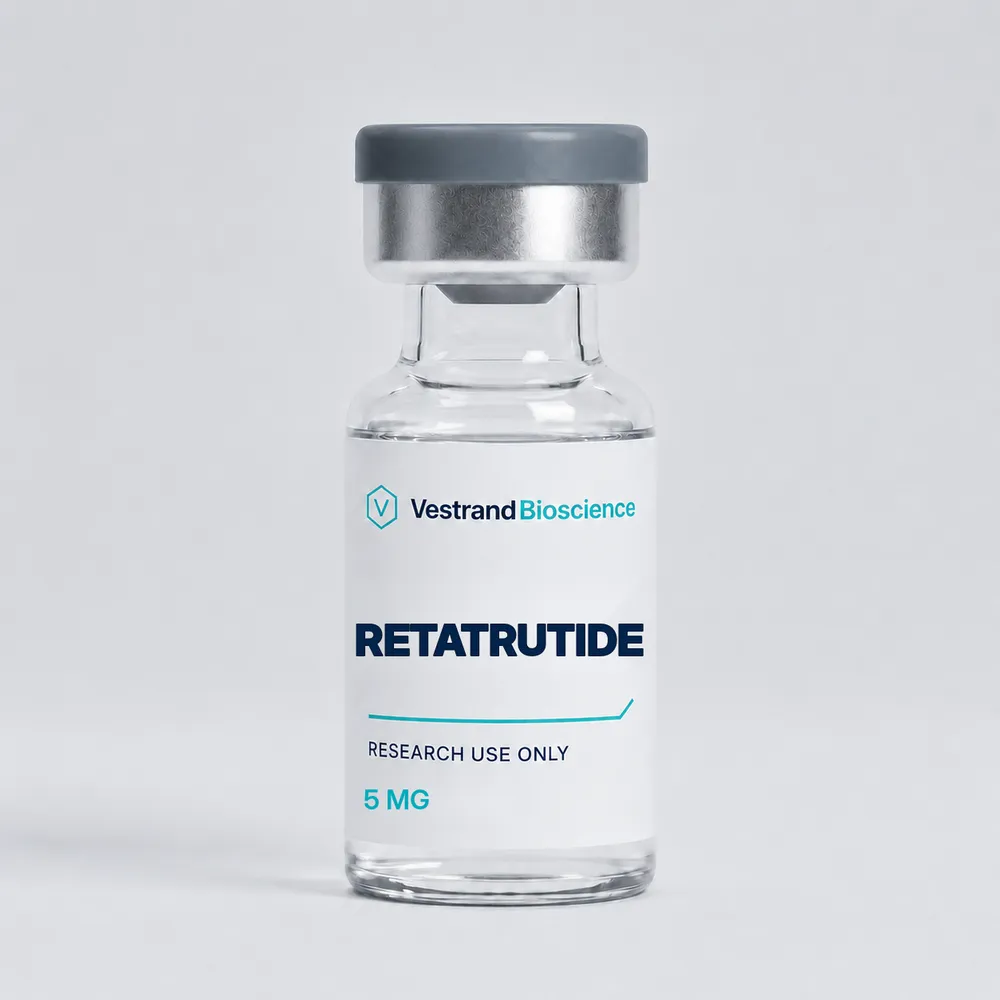
A synthetic 39-amino-acid research peptide in the GIP/GLP-1 dual-agonist class — a two-target incretin compound. A solid, supplied as a single-lot reference material.
Peptide
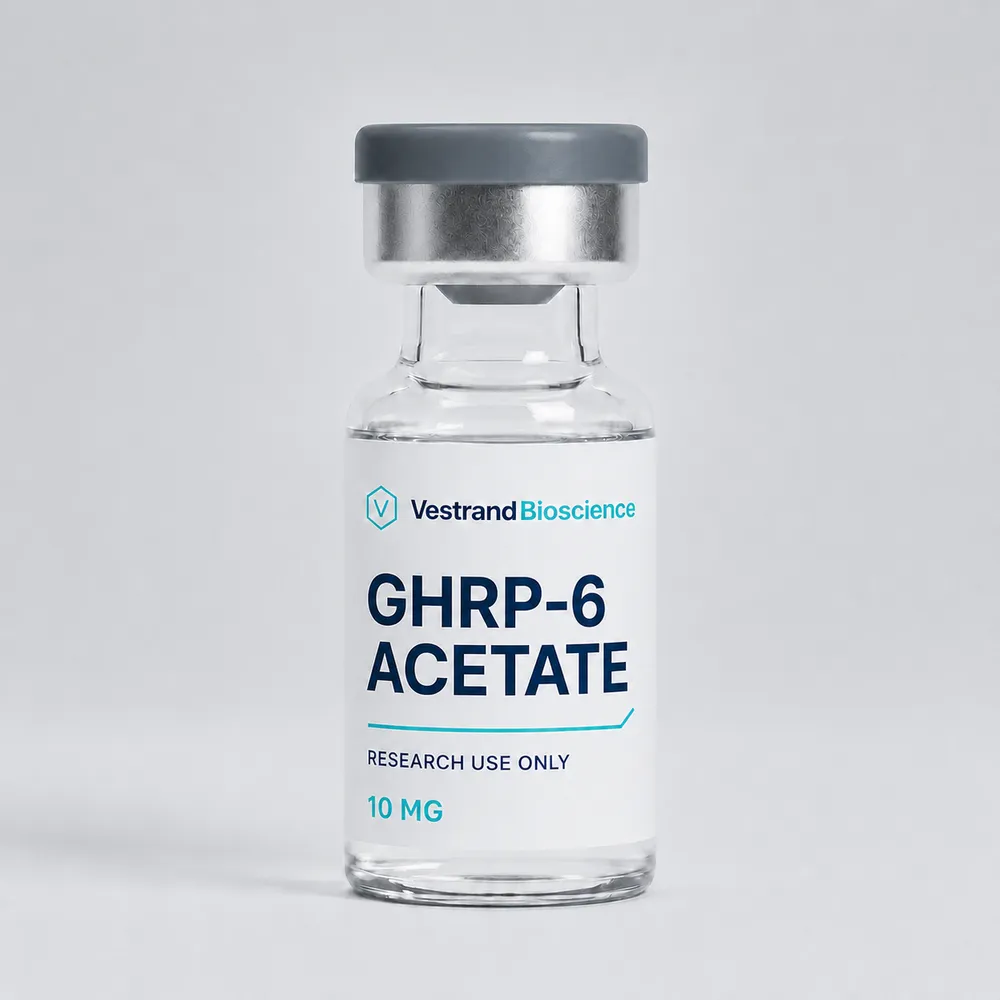
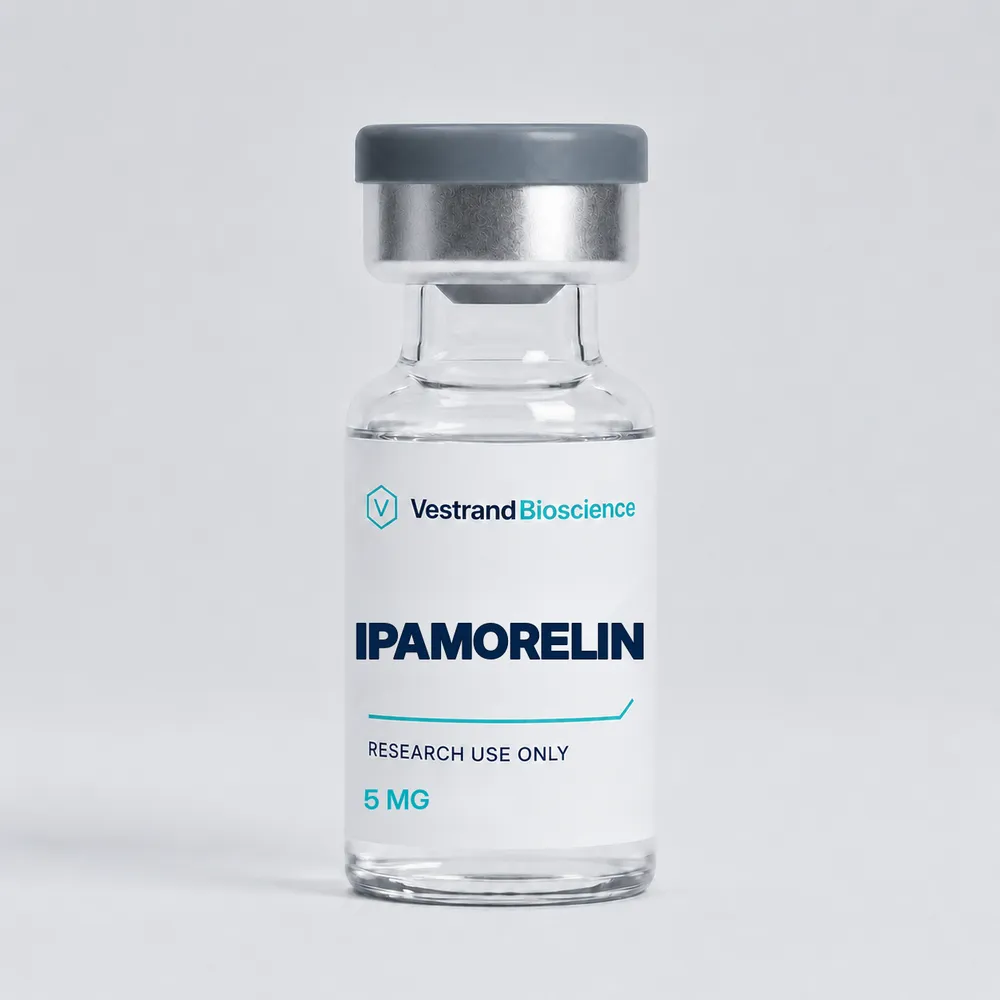
A synthetic five-building-block peptide (a pentapeptide) in the growth-hormone-secretagogue class — smaller than its six-block cousins, and heavily engineered.
Peptide
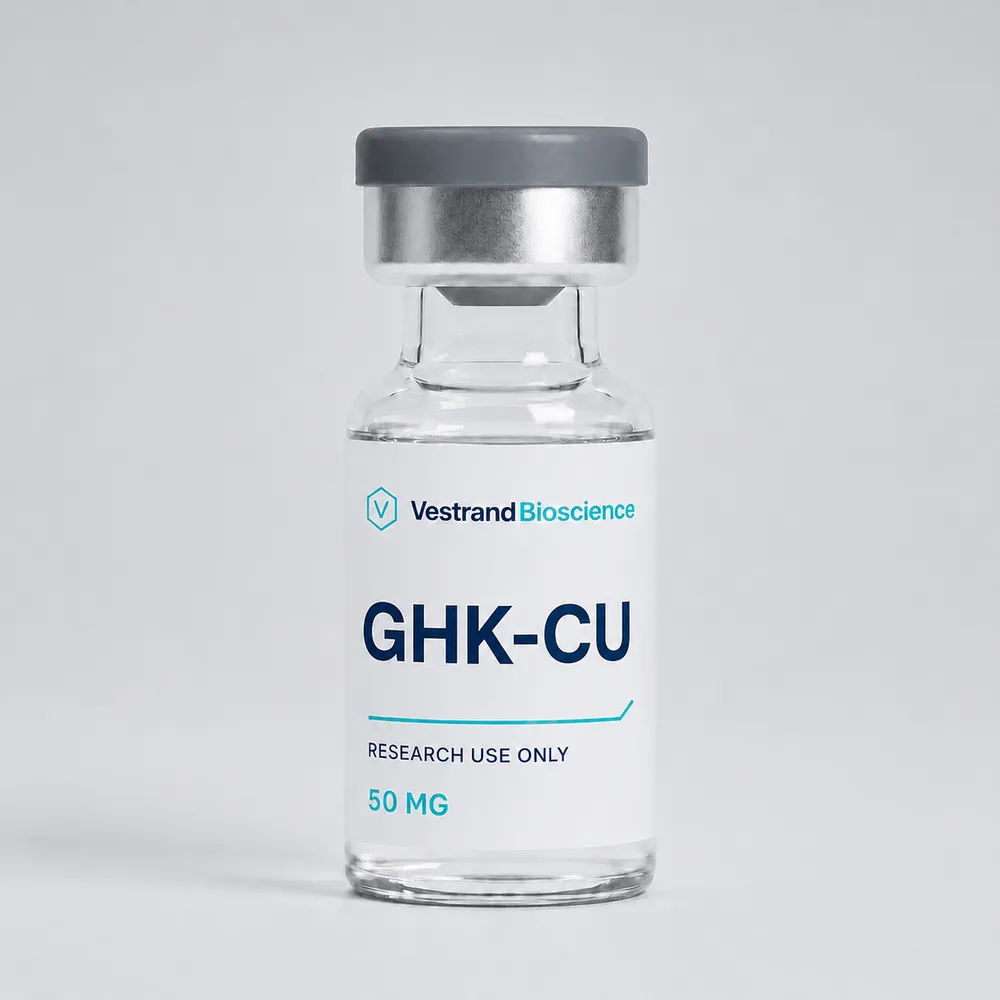
The copper-bound form of the tripeptide GHK: a single copper atom held by a three-building-block peptide, and a familiar small peptide in research.
Peptide
A synthetic tetrapeptide of just four building blocks, as a crystalline solid. Best verified by identity, since its name is shared with a different substance.
Peptide
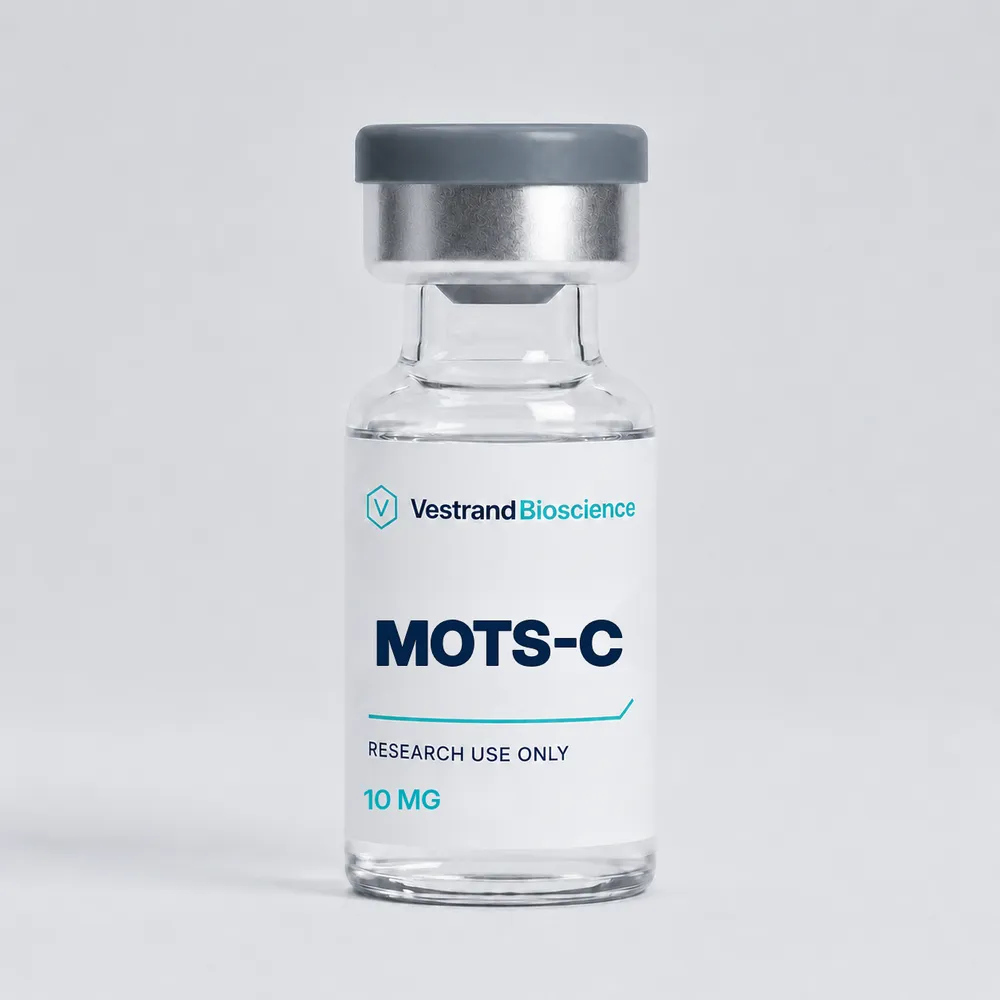
A synthetic 16-amino-acid peptide, unusual for being encoded within mitochondrial DNA rather than the nucleus. Supplied as a single-lot reference material.
Compounds are grouped by the receptor or pathway they act on — mechanism class, never an intended outcome.
Peptide
A synthetic research peptide in the incretin family, one of the multi-target (GLP-1/glucagon dual) compounds. Supplied as a single-lot reference material.
Peptide
A synthetic 39-amino-acid research peptide in the incretin family — one of the newer multi-target compounds. Supplied as a single-lot reference material.
Peptide
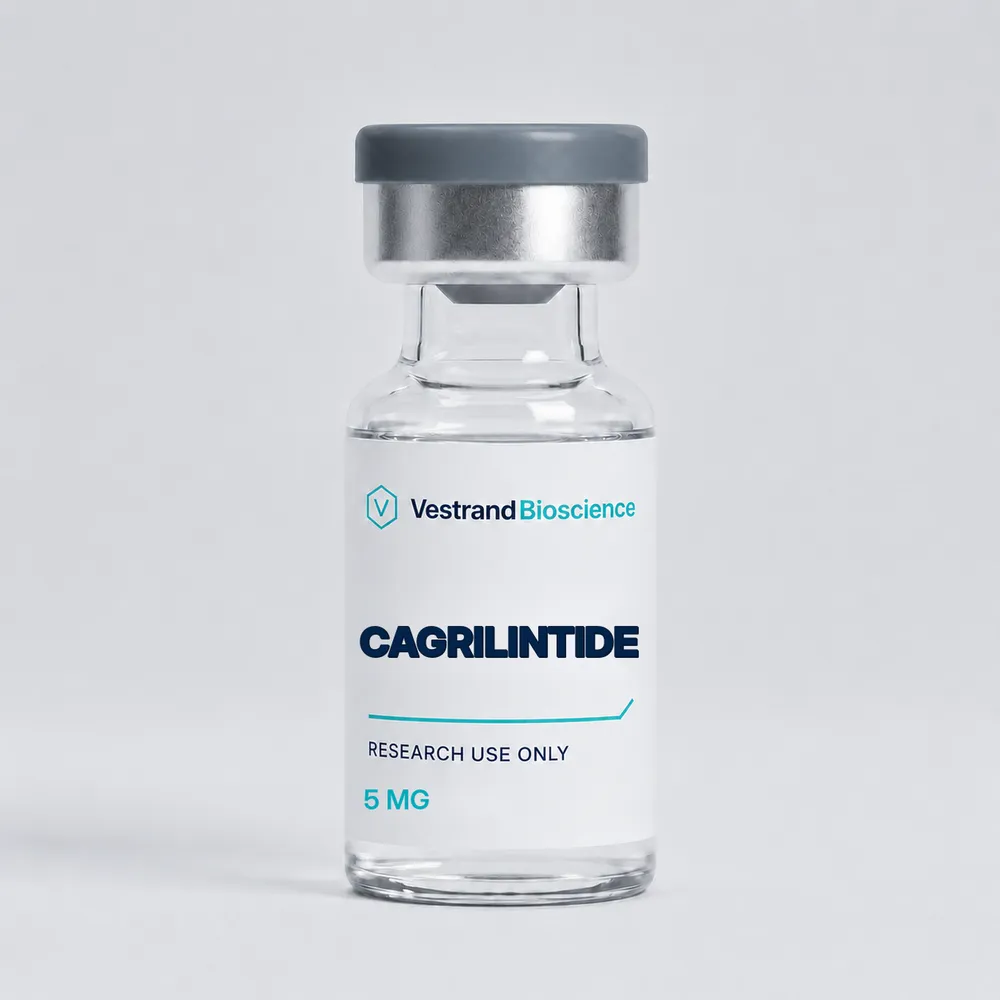
A larger peptide of thirty-seven building blocks, in the amylin-analogue class, carrying a fatty-acid tail attached to its chain.
Peptide
A synthetic 34-amino-acid research peptide, one of the multi-target compounds in the incretin family. Supplied as a single-lot reference material.
The essentials on documentation, testing, and handling. More detail on the FAQ.
Read the full FAQNotification when new lots publish. Roughly monthly. No promotional email.
Research use only
For laboratory research use only. Not for human or veterinary use.
Browse the catalog, or look up a lot number you already have.